
Millions of people put on lo-fi to study, work or fall asleep. Research on lo-fi itself is thin, but there is solid work on background music, lyrics and sleep. Here is what it says, and how to use lo-fi well.
We make Berceuse, an app with lo-fi playlists. This guide sums up published research and says where the evidence is weak. One study below comes from Brain.fm's director of science, and we say so.
The short answer
For studying, lo-fi is a sensible choice because it has no lyrics: lyrics hurt reading the most, while instrumental music shows no reliable effect either way. For sleep, a Cochrane review found that music improved self-reported sleep quality in adults with insomnia. Studies on lo-fi itself are few and weak.
Does lo-fi help you study? What research on music and reading says
There are almost no large studies on lo-fi and studying. But lo-fi is mostly instrumental music, and there is good research on how background music affects reading.
- A big review of 65 studies. Vasilev, Kirkby and Angele looked at background sound and reading in 2018 (Perspectives on Psychological Science). Background sound slightly hurt reading comprehension overall. Speech and music with lyrics hurt the most. Instrumental music showed no reliable effect.
- Lyrics versus no lyrics. Perham and Currie (2014, Applied Cognitive Psychology) found that music with lyrics hurt reading comprehension more than instrumental music or silence. That held whether people liked the music or not.
- An earlier overview. Kämpfe, Sedlmeier and Renkewitz (2011, Psychology of Music) found the overall effect of background music close to zero. It disturbed reading a little and could help mood.
So the honest answer is this. Lo-fi probably will not make you smarter. But it is a safer choice than songs with lyrics, and it may help your mood while you work.
Why lyrics matter more than the beat when you study
The studies point the same way: words are the problem. Speech and lyrics hurt reading the most, and this held even when people liked the music.
Instrumental music does not carry words. That is why lo-fi, piano or ambient music are a better match for reading or writing than pop songs. Silence is still slightly better for hard reading, according to the 2018 review. But if silence makes you restless, instrumental music is the next best thing.
Does lo-fi help you sleep? What research on music and insomnia says
Here the evidence is stronger, though it is about music in general, not lo-fi.
A 2022 Cochrane review by Jespersen and colleagues pooled 13 studies with 1,007 adults with insomnia. Listening to music improved self-reported sleep quality, and the authors rated the certainty as moderate.
Two things to keep in mind. First, "self-reported" means people said they slept better; it is not a measure from a sleep lab. Second, the review is about music in general, not lo-fi. Some lo-fi tracks have a strong beat, so for bed a slower, softer playlist may suit you better.
What studies on lo-fi itself show
Only a few studies look at lo-fi or similar focus music directly.
- A small lo-fi pilot. Dsouza and colleagues (2024, International Journal of Adolescence and Youth) asked 76 students to listen to lo-fi and found lower anxiety afterward. But there was no control group. Without one, you cannot tell if lo-fi caused the change, or if a quiet break would have done the same. This is weak evidence, and we would not lean on it.
- Amplitude-modulated music and attention. Woods and colleagues (2024, Communications Biology) found that music with amplitude modulation helped attention in people with more ADHD symptoms. The lead author is Brain.fm's director of science, and Brain.fm sells music built this way. It is one study, in one group, about a specific kind of music, not lo-fi in general.
In short: nobody has shown that lo-fi is special. What the research supports is broader. Instrumental music is fine for reading, and calm music can help adults with insomnia feel they slept better.

How to use lo-fi for study and sleep: practical tips
These tips follow from the research above. None of them is a promise. Try them and keep what works for you.
- Keep the volume low. Background music should stay in the background. If you notice the music more than your page, turn it down.
- Skip lyrics when you read. Lyrics hurt reading the most. Save songs with words for tasks like tidying or sorting.
- Try silence for the hardest reading. The 2018 review found background sound slightly hurt reading. For a dense chapter, compare a session with and without music.
- Put rain under the lo-fi. If a steady sound helps you settle, add rain under the music. Keep it softer than the beats.
- Pick slower lo-fi for bed. A calmer playlist suits sleep better than one with a punchy beat.
- Let the music end on its own. A sleep timer that fades out stops the music without a sudden cut.
How Berceuse helps you study and sleep with lo-fi
Berceuse is our app. Here is how it fits the tips above. As of September 2026 it has more than 40 lo-fi playlists, such as Study Beats, Library Hush and Rainy Rhodes. More than 80 mixes put rain, fire or a café under the beats.
- For study: browse the study or focus tag, or create a mix with focus as its purpose. Each layer has its own slider, so you can keep the rain soft and the beats low. No ads break into a reading session.
- For a train or a library: download mixes and playlists, and they play offline.
- For sleep: browse the sleep or calm tag for a softer playlist, then set the timer for 5 to 60 minutes. The sound fades out over the last 30 seconds.
- Hands free on iPhone: say "Play lo-fi on Berceuse" and Siri starts a lo-fi mix.
It costs $39.99 a year in the US, with a 3-day free trial. Compare it in the best lo-fi apps, or read how to build a sleep sound mix.
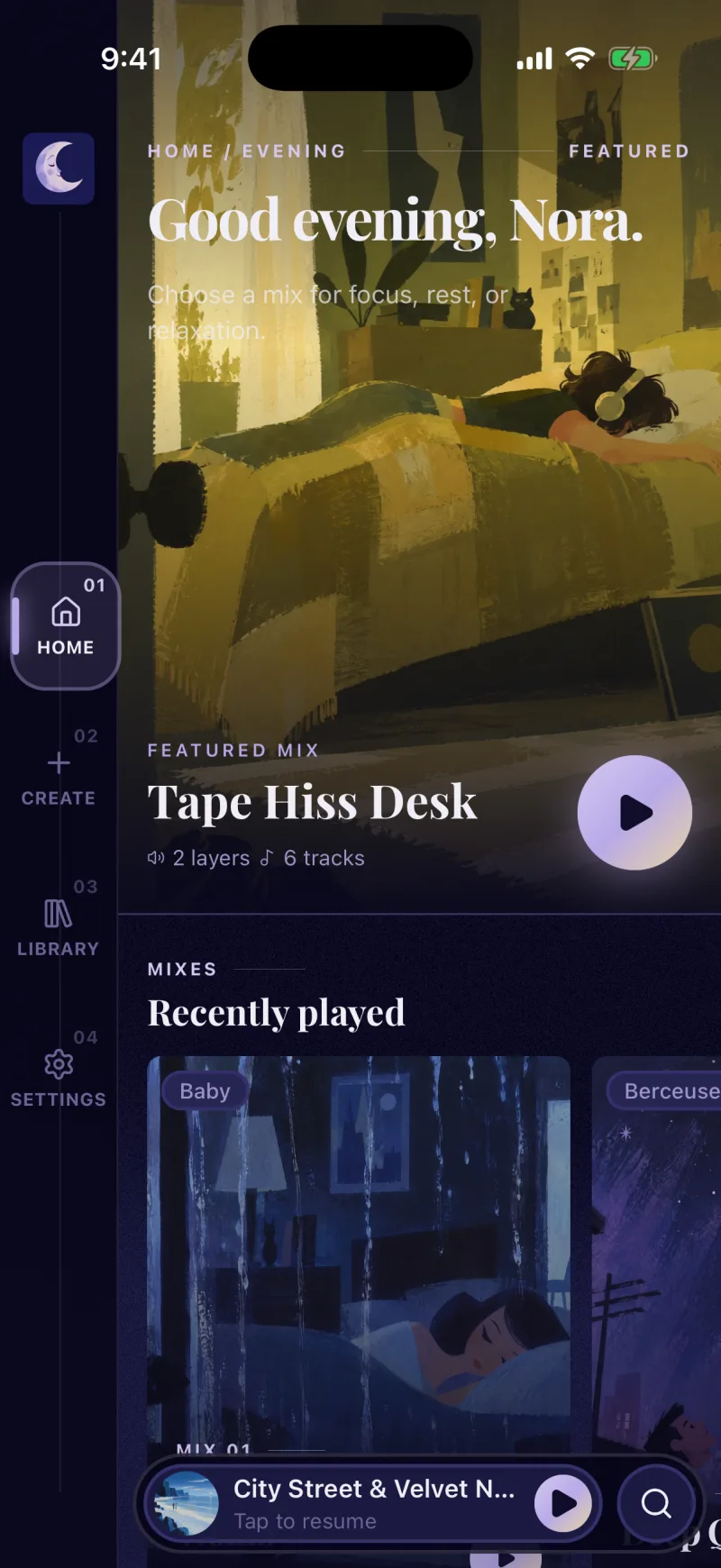
Home: tonight’s featured mix and the ones you played last.
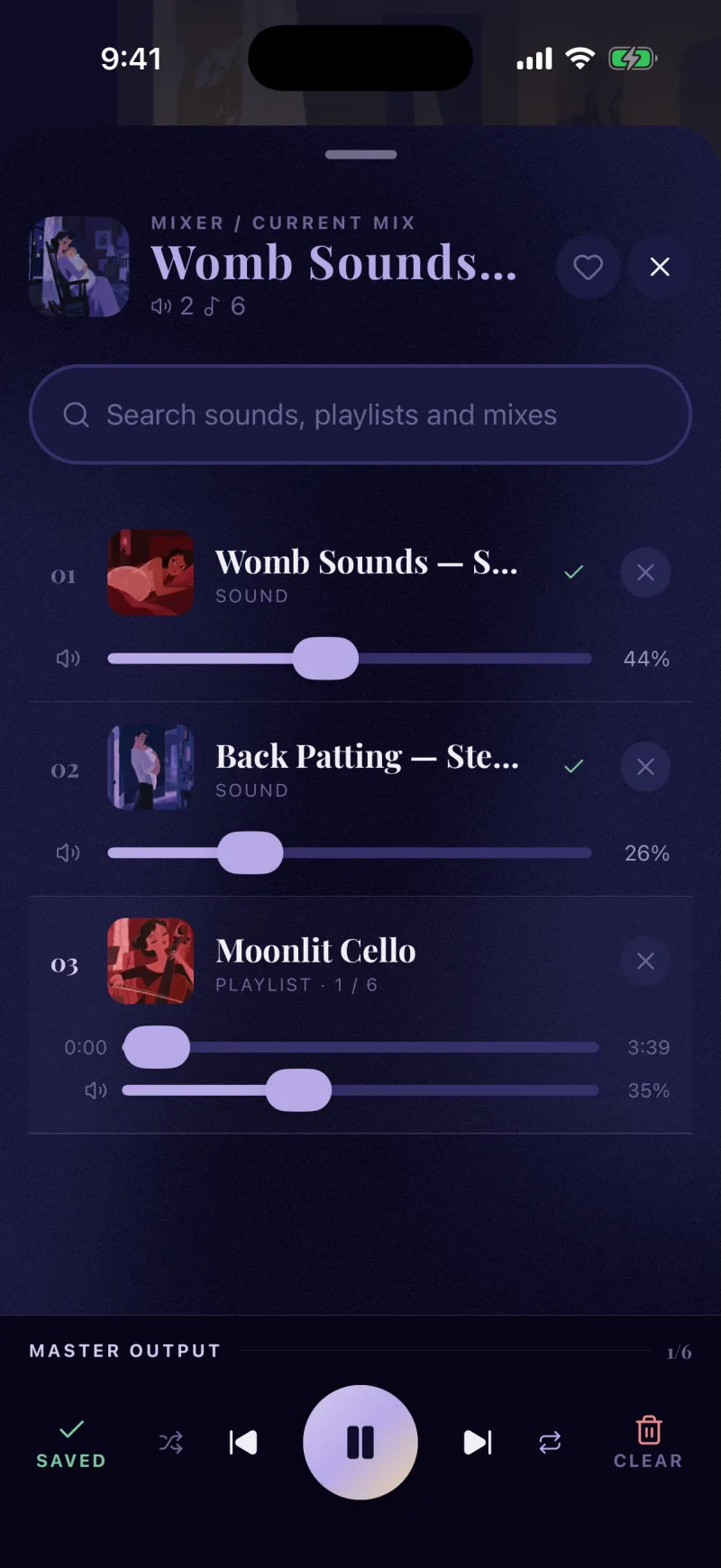
The mixer: each sound has its own volume, with music underneath.
Questions people ask
Is lo-fi good for studying?
It can be a good fit, mainly because it has no lyrics. Research finds that lyrics hurt reading the most, while instrumental music shows no reliable effect. There is no strong evidence that lo-fi itself boosts focus.
Is it better to study in silence or with music?
For hard reading, silence is slightly better on average, according to a 2018 review of 65 studies. If music helps your mood and keeps you at your desk, instrumental music at a low volume is the safer choice.
Is music with lyrics bad for studying?
For reading, yes, on average. Perham and Currie found that music with lyrics hurt reading comprehension more than instrumental music or silence, even when people liked the music.
Can lo-fi help you sleep?
Music can help. A Cochrane review of 13 studies found that music improved self-reported sleep quality in adults with insomnia. Those studies were about music in general, not lo-fi specifically.
Is lo-fi good for anxiety?
One small 2024 pilot found lower anxiety in students after listening to lo-fi. It had no control group, so it is weak evidence. It is not a treatment, and it is no replacement for medical help.
Does Brain.fm's music work better than lo-fi?
The studies we found do not compare them directly. A 2024 study found that Brain.fm-style amplitude-modulated music helped attention in people with more ADHD symptoms. Its lead author is Brain.fm's director of science. See Berceuse vs Brain.fm.
Sources
- Vasilev, Kirkby and Angele, Perspectives on Psychological Science (2018): meta-analysis of 65 studies on background sound and reading
- Perham and Currie, Applied Cognitive Psychology (2014): lyrics and reading comprehension
- Kämpfe, Sedlmeier and Renkewitz, Psychology of Music (2011): meta-analysis of background music
- Jespersen et al., Cochrane review (2022): music for insomnia in adults
- Dsouza et al., International Journal of Adolescence and Youth (2024): lo-fi pilot study
- Woods et al., Communications Biology (2024): amplitude-modulated music and attention