
White, pink and brown noise are all steady sounds with no tune. They differ in how much hiss or rumble you hear. Here is how to tell them apart, and how to pick one for your nights.
The short answer
White noise sounds hissy, like static. Pink noise is softer, like steady rain. Brown noise is a deep rumble, like heavy rain or surf. Research does not show that one color helps sleep more than another, so pick the one you find easiest to ignore, at a low volume.
Brown noise vs white noise vs pink noise
People call these sounds "noise colors". Each one is a steady sound with no tune and no beat. The color tells you how the sound's energy is spread between high and low pitches. More energy up high sounds like hiss. More energy down low sounds like rumble.
| White noise | Pink noise | Brown noise | |
|---|---|---|---|
| How the energy is spread | Equal at every frequency | Equal in each octave, falling 3 dB per octave | Falls 6 dB per octave, weighted to the low end |
| How it sounds | Hissy, like static | Softer, like steady rain | A deep rumble, like heavy rain or surf |
| You may like it if | You like a bright, even hiss | White noise feels too sharp to you | You prefer a low, deep sound |
The sections below explain each one in plain words, then what the research says, then how to choose.
What white noise is and how it sounds
White noise has equal energy at every frequency. High pitches get as much energy as low ones. That is why it sounds bright and hissy, like static from a radio between stations.
Some people like that brightness. It is even and simple, and it never changes. Others find it too sharp to listen to for a whole night. If that is you, the next two colors are softer.
There are also gentler versions of white noise. Berceuse, for example, has a warmer white noise next to the standard one, plus a baby white noise and an airplane white noise.
What pink noise is and how it sounds
Pink noise has equal energy in each octave. An octave is the step from one note to the same note higher up. In practice, pink noise falls 3 dB per octave. So the high end is quieter than in white noise.
The result is softer. Many descriptions compare pink noise to steady rain. It still covers a wide range of pitches, but with less hiss on top.
If you are looking at pink noise for sleep, it is a good middle ground to try first. If white noise feels harsh and brown noise feels too heavy, pink noise sits between them.
What brown noise is and how it sounds
Brown noise, also called red noise, falls 6 dB per octave. That is twice the slope of pink noise. Most of its energy sits in the low end.
It sounds like a deep rumble. Think of heavy rain on a roof, or surf. There is very little hiss.
If you like low sounds, or you find any hiss distracting, brown noise is the one to try.

Does noise help you sleep? What the research says
Here is the honest answer: the evidence is limited. The Cleveland Clinic points to two reviews, one of 38 studies (2020) and one of 34 studies (2022). Both found limited evidence that noise improves sleep.
So no study proves that brown noise beats white noise, or that pink noise beats both. Claims that one color "works best" go further than the research does.
That does not mean noise is useless for you. It means the studies are not strong enough to promise anything. The best test is your own nights. Try a color for a few nights, at a low volume, and see how you feel.
How to pick a noise color for your nights
You do not need to get this right on the first try. Here is a simple way to choose.
- Play each color for a minute. Use the same low volume for all three, so the test is fair.
- Pick the one you notice least. You want a sound that fades into the background, not one you keep listening to.
- Keep the volume low. Turn it up only until it softens the sounds you want to hide, like traffic or a neighbor's TV.
- Try it under something else. Noise works well as a bed under rain or soft music. Our guide on how to build a sleep sound mix shows how.
- Decide on a timer or all night. If a sound stopping wakes you, let it play. If you prefer silence once you are asleep, set a timer.
For a baby, the rules are stricter. The AAP advises placing a sound machine as far from the baby's head as possible and using it for a short time. Children's National Hospital suggests keeping the sound below about 50 dB, "similar to a soft conversation", with the machine at least two feet (about 60 cm) from the crib. Read more in is white noise safe for babies?
Berceuse lets you hear every noise color, then mix it under rain or music
The easiest way to pick a noise color is to hear them side by side. Berceuse has white noise (and a warmer white), baby white noise, airplane white noise, pink noise, brown noise, grey noise and velvet noise. Before you subscribe, you can hear a 10-second preview of each one, so you can run the one-minute test above before you pay.
Once you find your color, make it a layer in the mixer with its own volume slider. Put it under rain (about 20 settings, from a window to a tent), a fireplace or a piano playlist on its own channel. That is step 4 above, done in one app.
Then choose how the night ends. Let the noise loop all night, or set a 5 to 60 minute timer that fades out over the last 30 seconds. It keeps playing with the screen locked, and downloaded mixes play offline. Berceuse is $5.99 a month or $39.99 a year in the US, with a 3-day free trial.
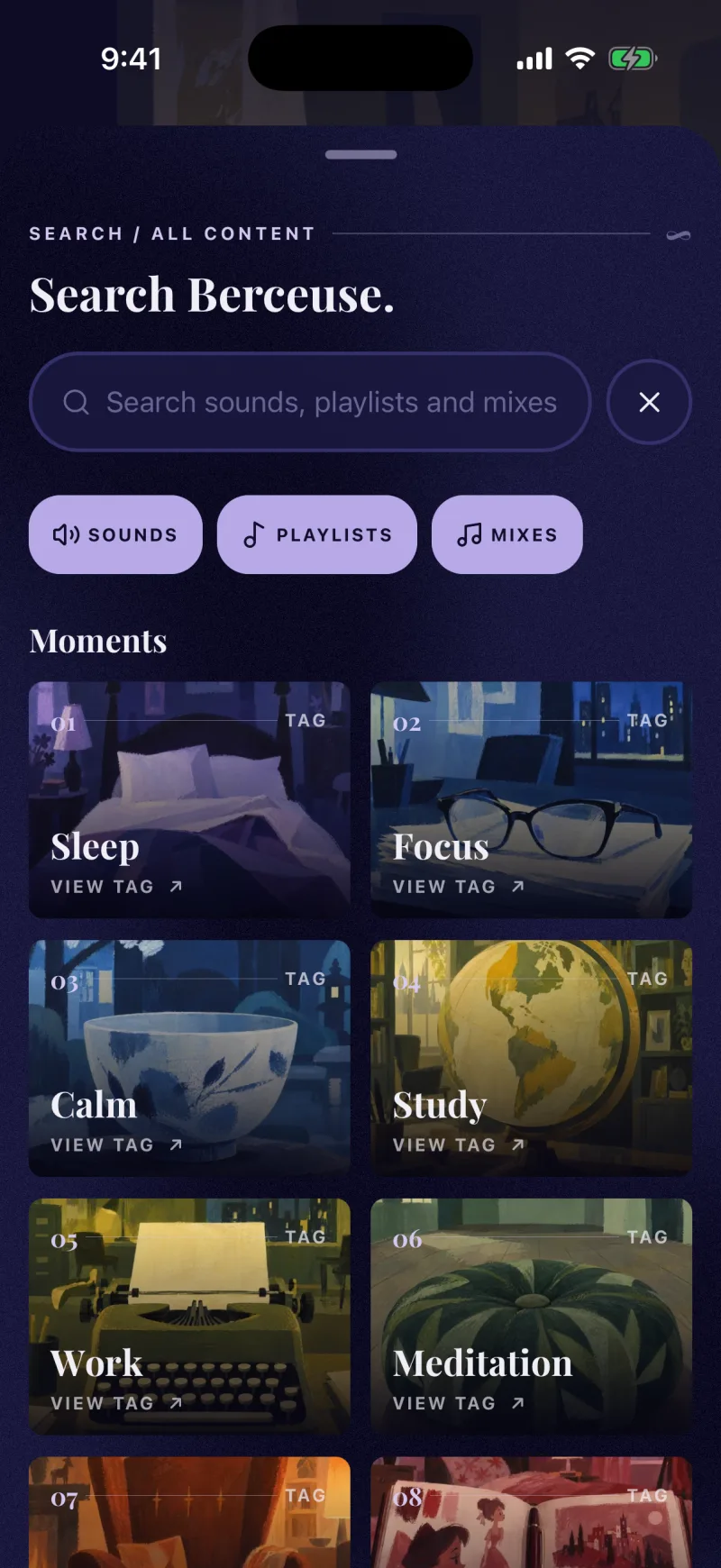
Or tap a moment: sleep, focus, calm, study.
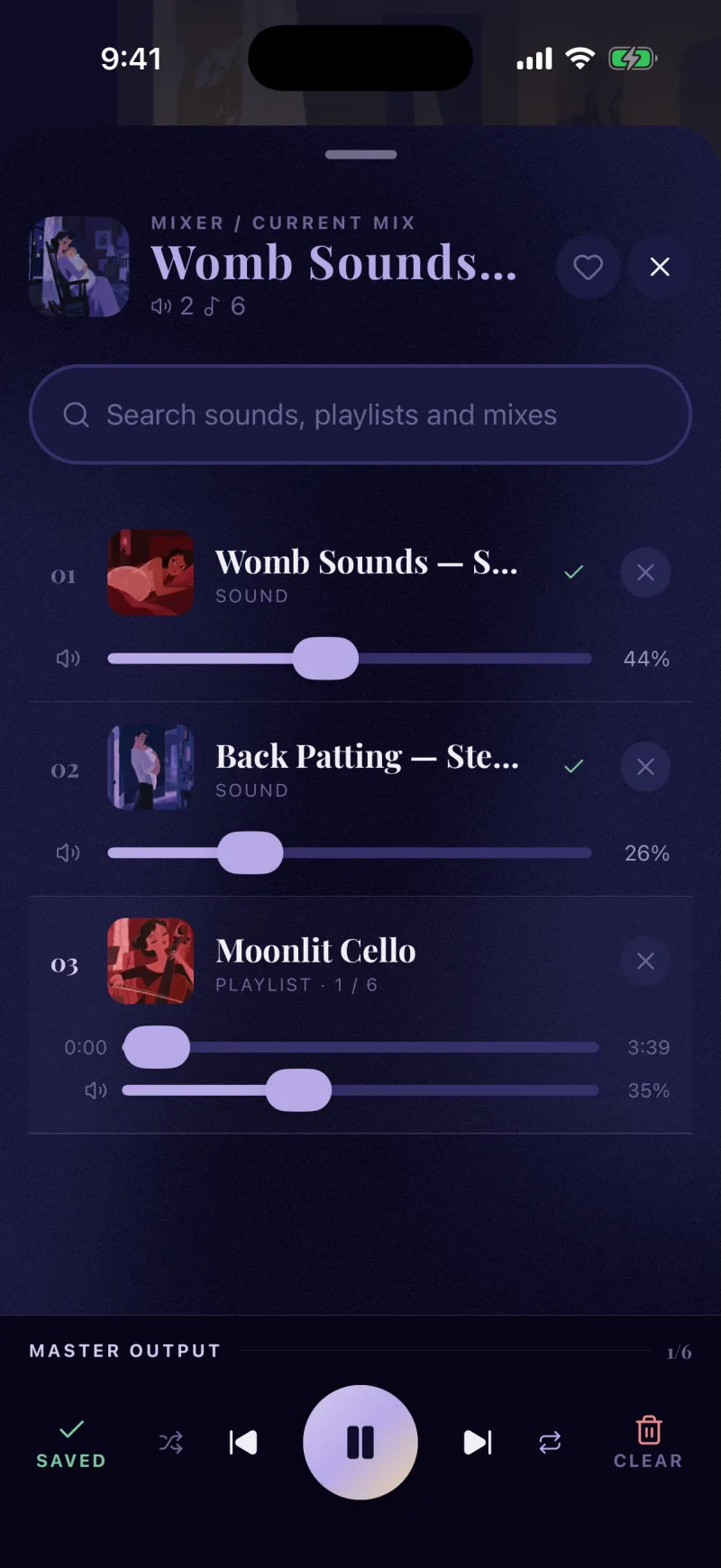
The mixer: each sound has its own volume, with music underneath.
Questions people ask
What is the difference between white, pink and brown noise?
The difference is where the energy sits. White noise has equal energy at every frequency and sounds hissy. Pink noise falls 3 dB per octave and sounds softer, like steady rain. Brown noise falls 6 dB per octave and sounds like a deep rumble.
Is brown noise better than white noise for sleep?
Not that the research can show. Reviews of dozens of studies found limited evidence that any noise improves sleep. Brown noise is lower and has less hiss, so if hiss bothers you, it may be easier to ignore. The right one is the one you notice least.
Does pink noise help you sleep?
The evidence is limited for pink noise, as it is for other noise colors. Pink noise is a softer option than white noise, so it is a good one to try if white noise feels harsh.
What is red noise?
Red noise is another name for brown noise. It falls 6 dB per octave and is weighted to the low end.
Is white noise safe for babies?
It can be used with care. The AAP advises keeping a sound machine as far from the baby's head as possible and using it for a short time. Keep the volume low and the phone out of the crib. Our guide on white noise for babies has the details.
Which noise colors does Berceuse have?
White noise (and a warmer white), baby white noise, airplane white noise, pink noise, brown noise, grey noise and velvet noise, as of September 2026.