Parents reach for all kinds of sounds at night: a shush, a heartbeat, a hummed lullaby, the hiss of white noise. Here is what each one is, when parents tend to use it, and how it fits into naps and bedtime.
The short answer
No single sound works for every baby, and evidence that noise improves sleep is limited. Parents often use womb sounds, shushing or white noise to settle a newborn, a steady noise for naps, and a soft lullaby as part of the bedtime routine. Whatever sound helps your baby sleep, keep it quiet and away from the crib.
Which sound helps a baby sleep, and when
| Sound | What it sounds like | When parents often use it |
|---|---|---|
| Womb sounds | A low, muffled whoosh with a soft pulse | Settling a newborn |
| Shushing | A steady "shhh", rhythmic, soft or whispered | Calming a fussy baby, newborn settling |
| Heartbeat | A slow, steady beat | Newborn settling, holding and rocking |
| White, pink or brown noise | A steady hiss, a soft rain or a deep rumble | Naps and night sleep, masking household noise |
| Car, stroller or bath water | A steady rumble or flowing water | Naps, especially for babies who settle on the move |
| Lullabies | A hum, a music box or a soft melody | The bedtime routine |
These are common uses, not rules. Babies differ, and what settles one may not settle another.
Womb sounds for settling a newborn
Womb sounds are recordings made to sound like the inside of the womb. They are low and muffled: a steady whoosh, often with a soft pulse underneath. They have no sharp edges and no sudden changes.
Parents often use them in the early weeks, when a newborn is being settled after a feed or in the evening. The sound is steady, so it can cover small noises in the house without drawing attention to itself.
Shushing a baby: rhythmic, soft and whispered
Shushing is the sound many parents make without thinking: a long "shhh" close to the baby while rocking or patting. A recorded shush does the same job, so your voice can rest.
Shushing comes in different styles. A rhythmic shush rises and falls in a steady pattern. A soft shush is gentler and more even. A whispered shush is the quietest, closer to a breath. Parents often start with a stronger shush to calm a fussy baby, then switch to a softer one as the baby settles.
Heartbeat sounds for a baby
A heartbeat sound is a slow, steady beat. Some recordings are of a mother's heartbeat. Parents tend to use it in the newborn weeks, often while holding or rocking the baby, or as a low layer under womb sounds.
Because it has a clear beat, keep it low. A heartbeat at a high volume is more noticeable than a smooth hiss.
White, pink and brown noise for baby naps and nights
Noise is a steady sound that does not change. It comes in different "colors".
- White noise has equal energy at every frequency. It sounds hissy, like static.
- Pink noise falls off toward the high notes. It sounds softer, like steady rain.
- Brown noise is weighted to the low end. It is a deep rumble, like heavy rain or surf.
Parents often use noise for naps, when the house is loud in the daytime, and at night to cover a street or a sibling. Some babies settle with the brighter hiss of white noise. Some parents find pink or brown noise easier to live with. Our guide to white, pink and brown noise explains the difference in more detail.
Car ride, stroller and bath water sounds for naps
Some babies seem to settle best on the move. You may know the baby who falls asleep in the car seat and wakes the moment the engine stops.
A car ride or stroller ride sound is a steady rumble with a gentle roll to it. Bath water is a soft, flowing sound. Parents use these mostly for naps, as a change from plain noise. They also work as a bed under a lullaby.
Lullabies, music boxes and mobile tunes at bedtime
Lullabies are slow, simple songs. They can be a parent humming, a music box, a toy piano or the tinkly tune of a crib mobile. Unlike noise, they have a melody, so they are easier to notice.
That is why parents often use them as part of the bedtime routine rather than all night: a bath, a feed, a song, then sleep. Some parents keep the same song each night so it becomes part of the routine. If you play a lullaby for the whole sleep, keep it very low, or put it under a steady noise.
You can also mix sounds. A common pairing is a steady bed, such as womb sounds or pink noise, with a quiet lullaby on top for the first part of the night.
What research says about sounds and baby sleep
Research on this is thin. One early study, by Spencer and colleagues in 1990, followed 40 newborns. With white noise, 80% fell asleep within 5 minutes, against 25% without it. The study was small and is now old, so treat it as one early result.
Later reviews are more cautious. The Cleveland Clinic points to reviews of 38 studies (2020) and 34 studies (2022) that found limited evidence that noise improves sleep. We found no research facts we could rely on for womb sounds, heartbeat or shushing on their own. So pick the sound your baby seems to like, and that you can stand to hear.
Whatever you play, keep it quiet, at least two feet (about 60 cm) from the crib and never in it, and turn it off or down once your baby is asleep: see Is white noise safe for babies?
How Berceuse puts womb sounds, shushing and lullabies in one mix
We make Berceuse, a sleep sounds and music app for iPhone and Android phones. Every sound in this guide is in its baby library, among more than 900 sounds and music tracks (as of September 2026). There are womb sounds, a heartbeat (including a mother's heartbeat), shushing in rhythmic, soft and whispered styles, a lullaby hum, baby white noise, pink and brown noise, a stroller ride, a car ride and bath water. For bedtime, there are music box, toy piano, twinkly keys and mobile-style lullabies, in 10 baby lullaby playlists.
You can build the pairing from this guide in one mix. Choose a baby and sleep or calm, add womb sounds as the bed and a heartbeat low on top, then put a lullaby playlist underneath on its own channel. Each layer has its own volume. The sleep timer (5 to 60 minutes) fades the sound out over the last 30 seconds. Berceuse is a subscription with a 3-day free trial. The best baby sleep sound apps compares it with other options.
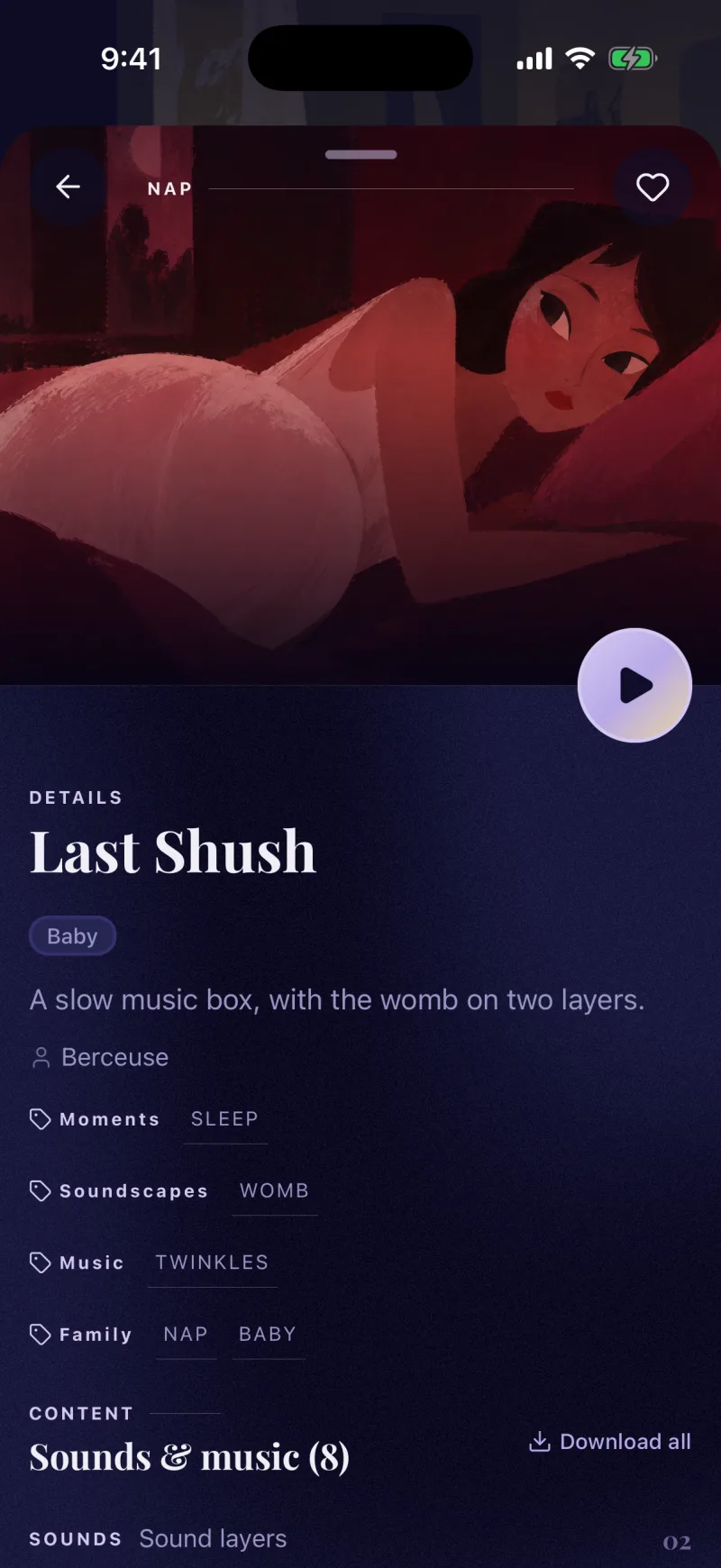
A ready-made nap mix for a baby: music box over womb sounds.
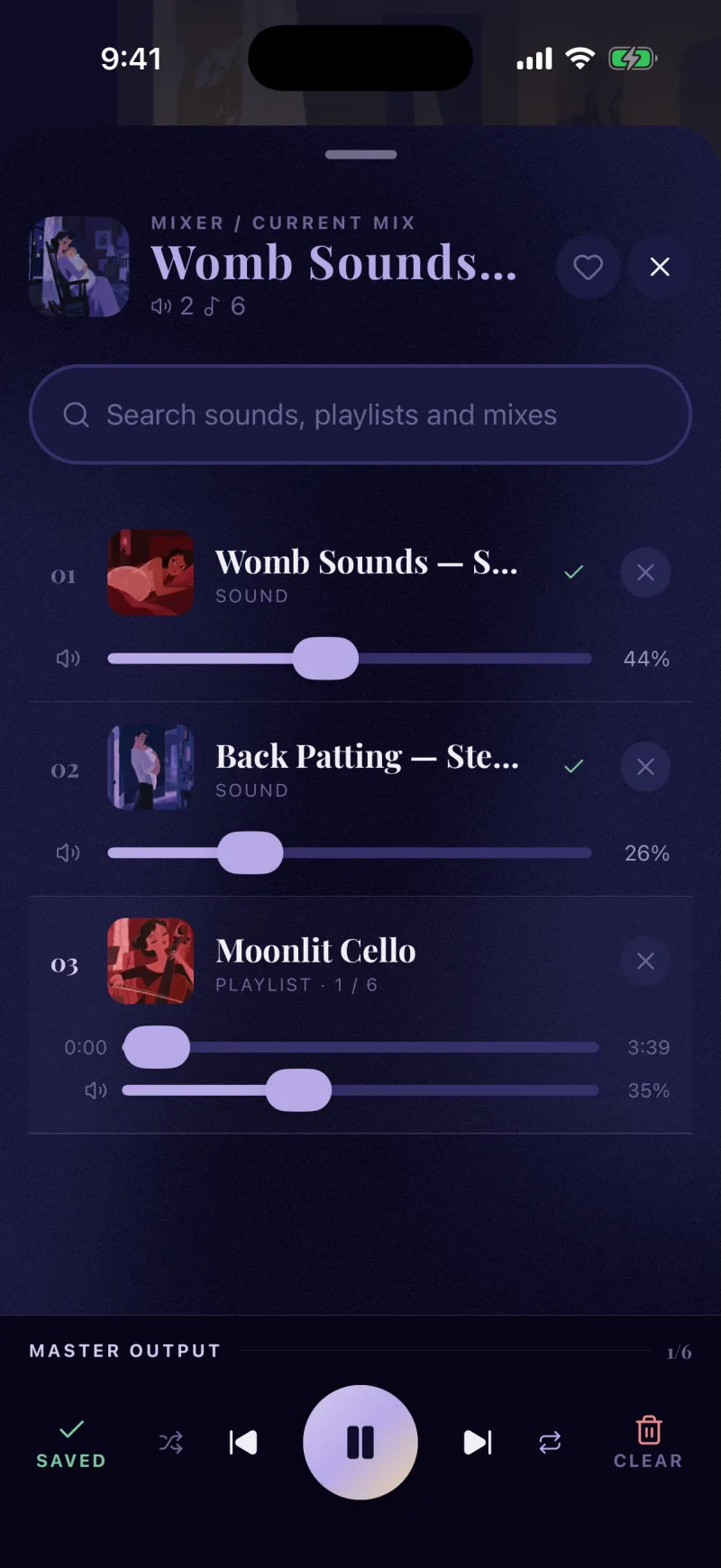
The mixer: each sound has its own volume, with music underneath.
Questions people ask
What sounds help a newborn sleep?
Parents often use womb sounds, shushing, a heartbeat or white noise to settle a newborn. No single sound works for every baby, and evidence that noise improves sleep is limited.
Are womb sounds better than white noise for a baby?
There is no research we can point to that compares them. Womb sounds are lower and more muffled. White noise is brighter and hissier. Try both at a low volume and see what your baby settles with.
Should a lullaby play all night?
It does not have to. Many parents use a lullaby as part of the bedtime routine, then switch to a steady sound or silence. If it plays longer, keep it very low.
What sound is best for baby naps?
A steady sound that covers daytime noise, such as white, pink or brown noise, or a car ride or stroller sound. Keep it quiet and away from the crib.
How loud should baby sleep sounds be?
Quiet. Children's National Hospital advises below about 50 dB, "similar to a soft conversation", with the machine at least two feet (about 60 cm) from the crib.